Blog
Nicotine strength for beginners: How to find the right dose for your first disposable e-cigarette
A comprehensive guide to choosing the right nicotine strength for your e-cigarette
Important note
This article is for information purposes only and is aimed at adult smokers who are considering switching to vaping as an alternative. The content provided here does not constitute medical advice. Nicotine is a highly addictive substance. If you are seeking help to quit smoking, please consult a doctor or qualified medical professional. All information on statutory regulations is based on EU and German standards and may be subject to change.
The choice of the right nicotine strength is one of the most fundamental decisions for anyone switching from traditional cigarettes to disposable e-cigarettes. This choice significantly influences not only satisfaction and vaping experience but also plays a crucial role in effectively controlling nicotine cravings. A wrong strength can lead to either an unsatisfactory experience that encourages a relapse into smoking or an overwhelming and unpleasant experience. This guide provides a detailed, fact-based foundation to enable you to make an informed decision and make the transition as smooth and successful as possible.
Section 1: Nicotine in e-cigarettes and EU legal regulations
Before choosing a nicotine strength, it is essential to understand the units of measurement for nicotine in e-liquids and the legal frameworks that govern the sale of these products within the European Union.
How nicotine strength is indicated: mg/ml vs. percent (%)
The concentration of nicotine in e-liquids is usually presented in two ways:
- Milligrams per millilitre (mg/ml): This is the most common indication. It specifies the exact amount of nicotine in milligrams contained in every millilitre of e-liquid. For example, a 10 ml bottle with 6 mg/ml e-liquid contains a total of 60 mg of nicotine.
- Percent (%): Occasionally, the strength is given as a percentage of the total volume. The conversion is straightforward: 10 mg/ml is equivalent to 1% nicotine. An e-liquid with 20 mg/ml therefore has 2% and a liquid with 3 mg/ml contains 0.3% nicotine.
Important EU regulations: The Tobacco Products Directive (TPD)
Across the entire European Union, including Germany, the sale of vaping products is subject to the Tobacco Products Directive (TPD). This legislation sets strict safety and quality standards to protect consumers. For anyone purchasing a disposable e-cigarette or e-liquid, the following TPD rules are of paramount importance:
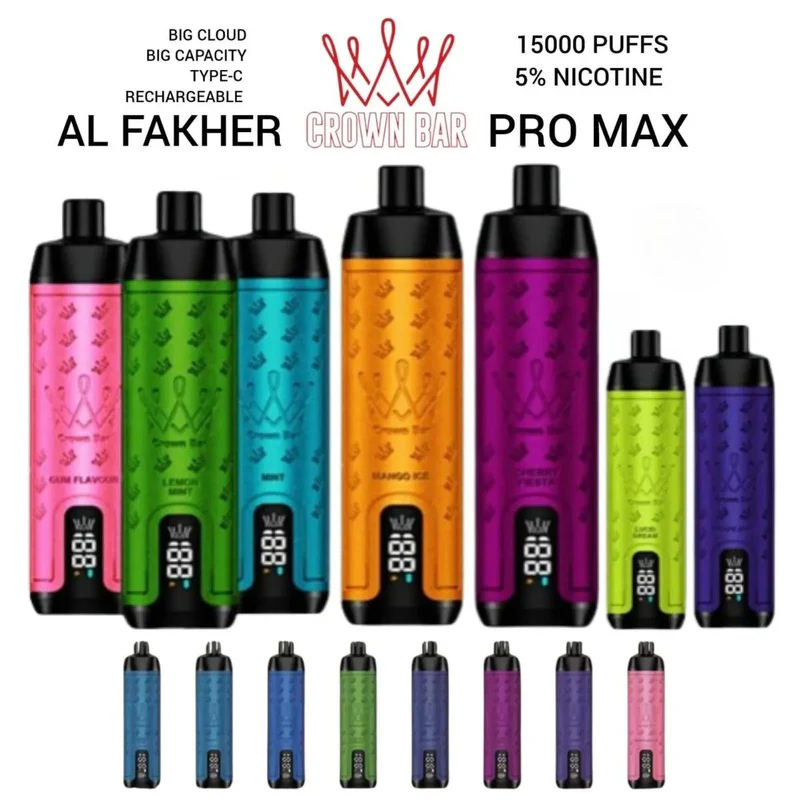
- Maximum nicotine strength: The legally permissible maximum concentration for nicotine in e-liquids is 20 mg/ml (or 2 %). Any product that is advertised with a higher strength (e.g. 50 mg/ml or 5%) is illegal for sale within the EU.
- Maximum filling volume: For disposable e-cigarettes and pre-filled pods or tanks, the maximum capacity is 2 ml10 ml 10 ml.
These regulations ensure that products sold by compliant traders like Al Fakher Welt meet safety standards. Be cautious of products that exceed these limits, as they do not comply with regulations and may not have undergone the necessary safety checks.
Section 2: The correct nicotine strength based on your smoking habits
The most reliable way to determine your initial nicotine strength is to base it on your previous daily cigarette consumption. The goal is to replicate the nicotine intake you are accustomed to, in order to minimise withdrawal symptoms and make the transition easier.
| Smoking habit (cigarettes per day) | User profile | Recommended nicotine salt strength (for disposable e-cigarettes) | Recommended Freebase nicotine strength (for refillable systems) |
|---|---|---|---|
| 20+ (Heavy Smoker) | People who smoke a box or more per day and often experience a strong craving shortly after waking up. | 18 mg/ml – 20 mg/ml (1.8% – 2.0%) The highest legal strength, developed for immediate and strong satisfaction to manage intensive withdrawal symptoms. | 12 mg/ml – 18 mg/ml (1.2% – 1.8%) Provides a strong "throat hit" that heavy smokers are used to. |
| 10-20 (average smoker) | People who smoke between half a box and a whole box per day. | 10 mg/ml – 12 mg/ml (1.0% – 1.2 %) A balanced, medium strength that satisfies regular cravings without being overwhelming. A good starting point for most switchers. | 6 mg/ml – 12 mg/ml (0.6% – 1.2%) Provides a noticeable throat hit and a satisfying nicotine delivery for moderate smokers. |
| 1-10 (Light smoker) | People who smoke less than half a box a day are often more social. | 5 mg/ml – 10 mg/ml (0.5% – 1.0%) Provides a mild dose of nicotine that is sufficient for occasional cravings. | 3 mg/ml – 6 mg/ml (0.3% – 0.6%) A low strength that provides a gentle experience with minimal throat hit, ideal for individuals with low nicotine dependence. |
| 0 (Occasional smoker / nicotine withdrawal) | People who smoke very rarely or vapers who have successfully reduced their nicotine intake. | 0 mg/ml (0 ppm) Nicotine-free options for those who want to enjoy the flavour and act of vaping without nicotine. | 0 mg/ml (0 ppm) Allows the enjoyment of flavour and vapour production without an addictive substance. |
Section 3: Nicotine Salt vs. Freebase Nicotine – A Detailed Comparison
The type of nicotine in your e-liquid is just as important as the strength. Disposable e-cigarettes almost exclusively use nicotine salts, while traditional e-liquids offer a choice between salts and freebase nicotine. Understanding the differences is crucial to finding the perfect vaping experience.
Nicotine salt
Nicotine salt is the natural form of nicotine as it occurs in the tobacco leaf. It is combined with an acid (such as benzoic acid) to lower its pH level. This chemical modification results in a distinctly smoother vaping experience, even at high nicotine concentrations.
- Smoother throat hit: The lower pH value makes it less harsh, allowing users to comfortably vape high strengths such as 20mg/ml.
- Faster recording: Nicotine salts are absorbed by the bloodstream faster than freebase nicotine, leading to a faster, cigarette-like satisfaction.
- Ideal for beginners: The gentle release and quick satisfaction make it an excellent choice for smokers switching to vaping.
- Optimal for low-power devices: Perfect for disposable e-cigarettes and pod systems that operate at lower wattages.
Freebase nicotine
Freebase is the purest form of nicotine and for many years was the standard in e-liquids. It is made by adding ammonia to remove protons from the nicotine salt, which raises the pH level and makes it more potent, but also makes it harsher at higher concentrations.
- Stronger throat hit: The higher alkalinity ensures a more pronounced "throat hit", which some former smokers prefer, as it mimics the sensation of smoking.
- Slower uptake: It is absorbed by the body more slowly, leading to a more gradual build-up of the nicotine level.
- Better for nuances of taste: At lower concentrations (3 mg, 6 mg), the lower hardness allows more complex flavour profiles to come to the fore.
- Optimal for high-performance devices: Ideal for sub-ohm tanks and advanced mods that produce large clouds of vapour.
Section 4: Fine-tuning Your Selection – Playing Style and Device
Your device and inhalation technique also play a significant role in nicotine delivery. The two primary draw styles are Mouth-to-Lung (MTL) and Direct-to-Lung (DTL).
Understanding the train styles
Mouth-to-Lung (MTL) This technique mimics smoking a cigarette. You draw the vapour into your mouth first and then inhale it into your lungs. MTL vaping is typical of disposable e-cigarettes and low-power pod systems. It produces less vapour and is best suited to higher nicotine strengths (10mg – 20mg).
Direct-to-Lung (DTL): This is like a deep breath directly from the device into the lungs. DTL vaping is practiced with powerful sub-ohm devices with a wide open airflow. This style produces massive vapour clouds and delivers nicotine very efficiently, which is why DTL vapers almost always use low nicotine strengths (0 mg – 6 mg). Vaping a highly concentrated nicotine e-liquid with a DTL device would be extremely harsh and would deliver an excessive amount of nicotine.
Section 5: Recognising the signs: Is your nicotine strength right?
Your body will give you clear signals if the chosen nicotine strength is not suitable. Paying attention to these signs will help you adjust your strength for a better experience.
Signs of TOO HIGH nicotine strength
If you vape a concentration that is too strong for your tolerance, mild symptoms of nicotine overdose may occur. These include:
- Dizziness or lightheadedness
- Nausea or indigestion
- Headaches
- Elevated pulse
If you notice these symptoms, stop vaping immediately. The symptoms should subside quickly. Consider switching to a lower nicotine strength.
Signs of TOO LOW nicotine strength
If your nicotine strength is not sufficient to satisfy your cravings, you will also notice clear signs:
- Persistent craving for cigarettes
- The need to constantly vape in order to feel satisfied
- Feeling of dissatisfaction or irritability after vaping
- A weak or non-existent throat hit
If this applies to you, you should try a slightly higher nicotine strength to better control your cravings.
Section 6: The Path to Nicotine Reduction – A Guide to Tapering Off
For many, the long-term goal is to reduce and eventually overcome nicotine addiction. Vaping offers the unique benefit of allowing a gradual and controlled reduction in nicotine intake. This process is known as tapering or weaning.
A practical approach to gradual reduction
The key to successful tapering lies in taking it slowly, allowing your body to adjust to the lower nicotine levels. A rushed process can lead to withdrawal symptoms and a potential relapse into smoking.
- Start at the right level: Start with the strength that effectively replaces your smoking habits and keeps you away from cigarettes. Stay at this level until you feel stable and secure.
- Take a small step down: Once you're ready, switch to the next lowest available strength. For example, if you started with 20 mg/ml, your next step would be 10 mg/ml or 12 mg/ml. Stay at this new level for several weeks or even months.
- Listen to your body: Pay attention to how you feel. If you find that you vape much more frequently or have strong cravings, you may have reduced your nicotine strength too quickly. It's okay to stay on a particular level for longer or, if needed, to go up a notch for a short time.
- Continue the process: Continue with this gradual reduction, switching from medium strengths (e.g. 10 mg/ml) to low strengths (e.g. 6 mg/ml, then 3 mg/ml).
- The final step to zero: The final step is the transition from the lowest nicotine level (e.g. 3 mg/ml) to a nicotine-free (0 mg/ml) e-liquid. This allows you to break the chemical dependency while continuing to maintain the behavioural habit of vaping, which you can then give up at your own pace.
Section 7: Your wholesale partner for disposable e-cigarettes in Europe
For companies that want to offer their customers high-quality and compliant disposable e-cigarettes, a reliable wholesale partner is essential. On alfakher24h.de We are the largest online wholesale platform for disposable e-cigarettes and proudly serve retailers in the Netherlands, Germany, Belgium, France, Portugal, Spain, Poland, and Denmark.
Why choose Al Fakher World for wholesale?
We offer an extensive selection of top brands such as Al Fakher, Randm Fumot, Vozol and more, to ensure that you have access to the products your customers are asking for. All of our products are fully TPD compliant, providing you and your customers with peace of mind. With competitive pricing, fast and reliable shipping across Europe and a commitment to excellent service, we are your ideal partner for growing your e-cigarette retail business.
Frequently Asked Questions (FAQs)